
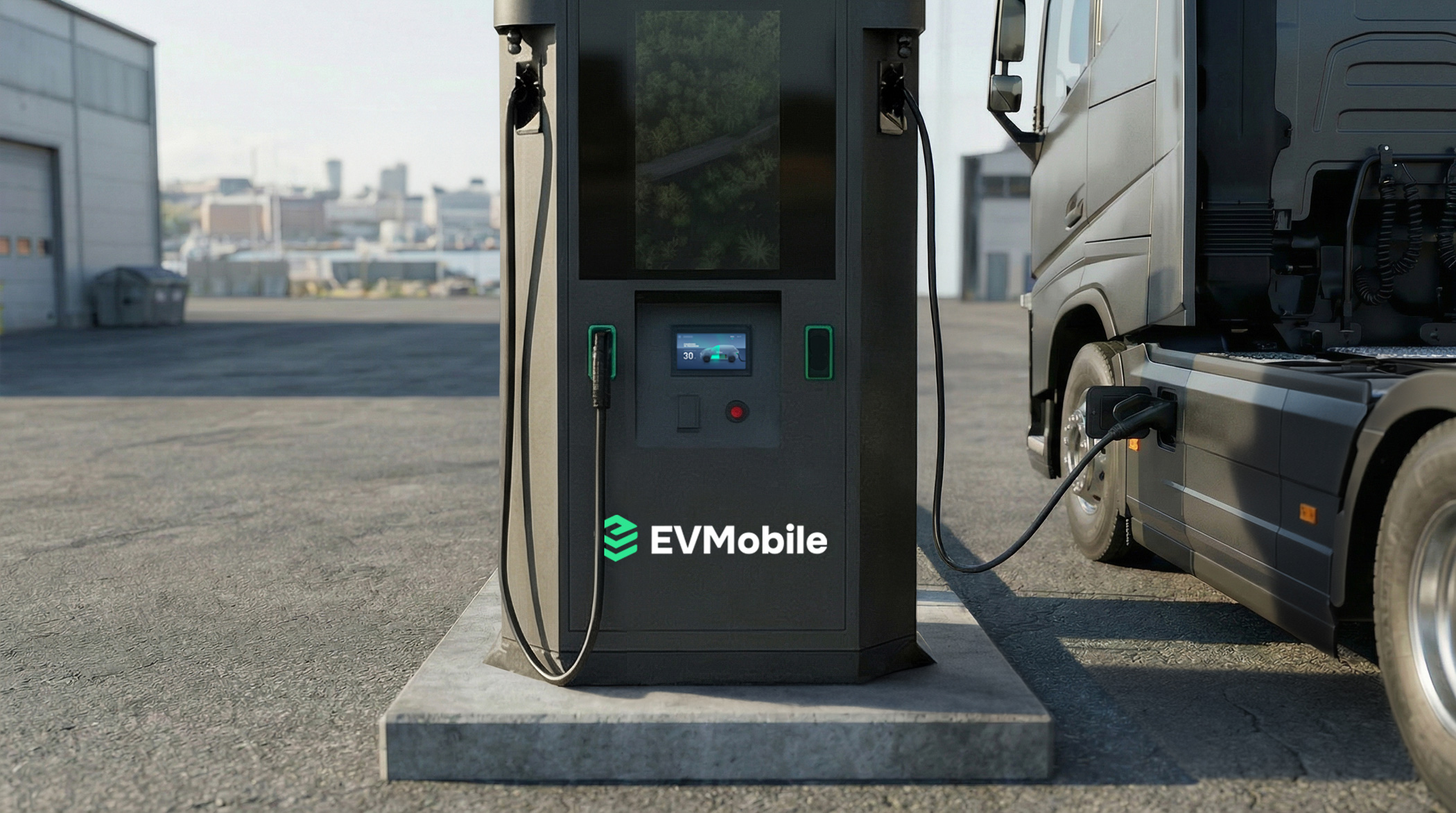
High-power charging for heavy-duty vehicles without operational interruptions.
The electrification of heavy-duty transport is progressing rapidly, and charging must not impede operations. When vehicles stop for unloading, loading, or a break, charging must occur precisely within that time window – reliably and predictably. We bring battery-buffered high-power charging to where the fleet is, without significant investments or reliance on the grid’s momentary capacity.

Charging occurs during work – not dictated by the depot
Traditionally, heavy-duty vehicle charging is planned for depots and permanent bases. In practice, a large portion of the fleet moves between terminals, construction sites, ports, and various endpoints, and does not return to the same location for charging.
Our solution brings charging capacity closer to actual use. Charging does not need to be concentrated at a single permanent point; instead, it can be placed where it best supports operational activities and schedules.

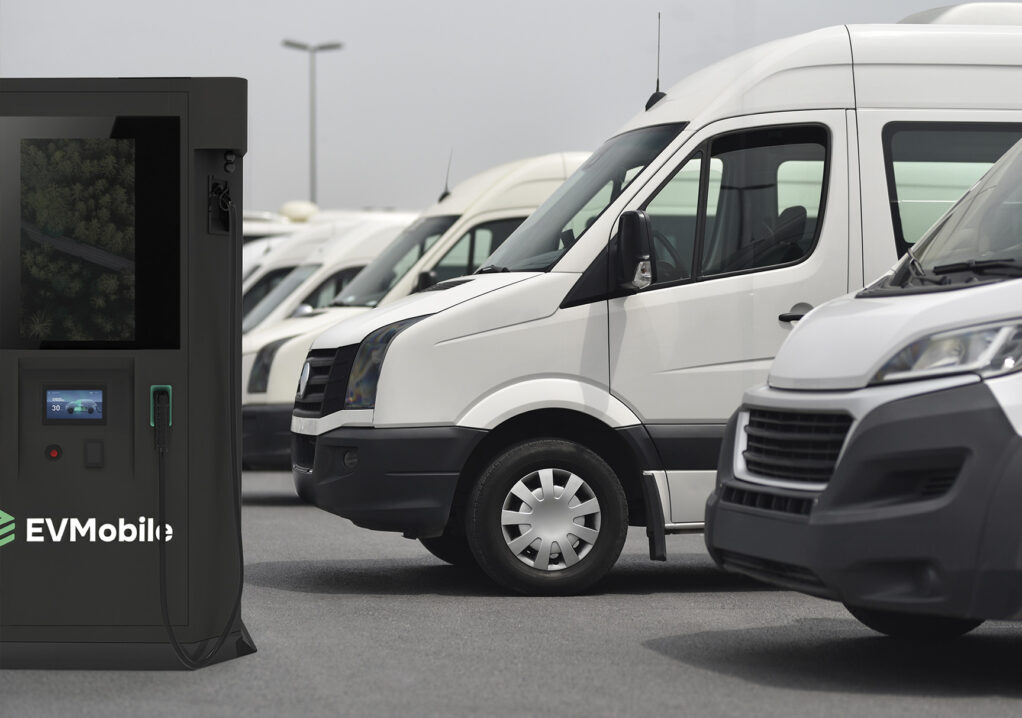
Fleet operates on schedule
In heavy-duty transport, the charging window is often precisely defined. A vehicle arrives at its destination for a limited time, and sufficient energy must be obtained within that exact period for the next journey.
EV Mobile sizes the charging power according to the actual stop time, not based on the theoretical capacity of the electrical connection. Battery buffering enables high charging power even with a limited connection and simultaneous charging of multiple vehicles without capacity peaks.
This way, charging supports schedules instead of schedules having to adapt to charging.
Operational reliability is critical
In logistics, every disruption incurs costs. Charging must function consistently every day, even during peak loads and exceptional situations.
EV Mobile delivers the solution as a service model, where we are responsible for the overall functionality. The system is continuously monitored, performance is tracked, and maintenance is scaled for critical use.
For the customer, this means that charging works as part of daily operations without continuous operational concerns.

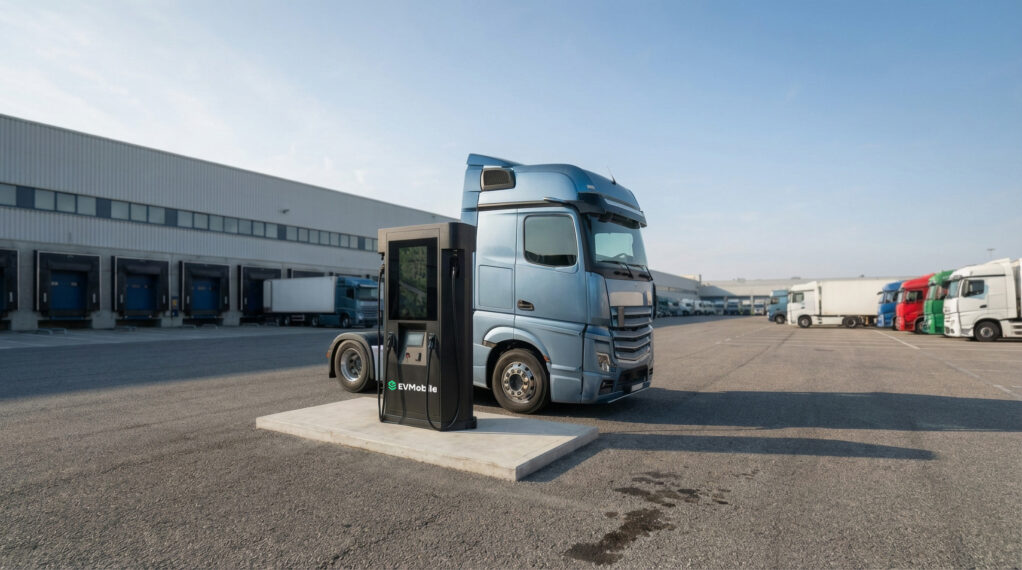
Electrification without over-dimensioning
In the traditional model, charging infrastructure is dimensioned for future peaks. This ties up capital and increases risk if fleet electrification progresses in phases.
With EV Mobile’s solution, capacity can be built according to actual use. Battery buffering provides the necessary charging power without the entire system needing to be dimensioned for the extreme end from the outset.
This improves cost predictability and supports electrification on a controlled timeline.
Dimensioned according to fleet and operating rhythm
Every logistics site is unique. The solution is designed according to vehicle type, stop time, operating rhythm, and load peaks.
The complete solution may include:
- Multiple high-power charging points
- A battery buffer dimensioned for peak usage
- Continuous monitoring and reporting
- A service level agreement for critical use
The solution supports fleet electrification without infrastructure limiting operations.

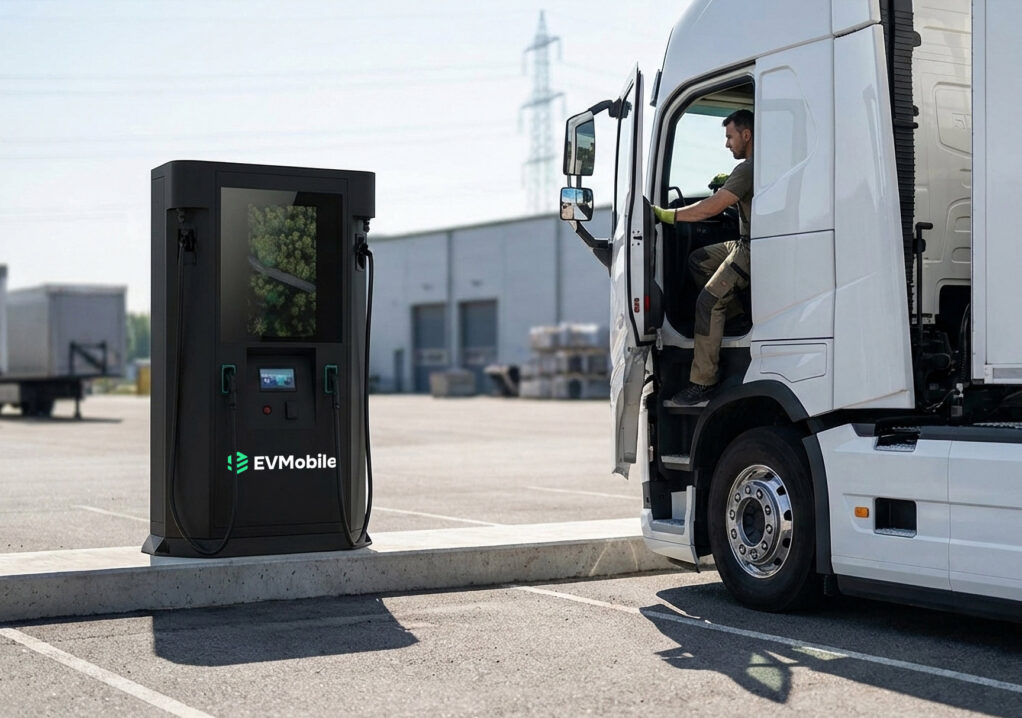
Charging also for changing and exceptional situations
In logistics and heavy-duty transport, charging needs are not always predictable. Routes change, schedules tighten, and the need for additional capacity can arise on short notice.
EV Mobile enables charging capacity to be brought to a site temporarily or during a transition phase. This means charging is not tied to a single depot point or a large, slow investment, but supports operations even in changing situations.
EV Mobile is responsible for the functionality of the solution throughout the contract period. Technical and operational responsibility does not remain with the customer.
This means less operational risk, better fleet utilization, and charging that works as part of daily operations.
Frequently Asked Questions
Yes. The solution is designed for scenarios requiring rapid charging for multiple vehicles simultaneously. Battery buffering enables high charging power even with limited grid capacity.
The battery buffer balances the load, ensuring charging power is available during peak demand without overloading the grid.
EV Mobile is responsible for the functionality of the solution in accordance with the service agreement. The system is continuously monitored, and maintenance is included in the service agreement.
Yes. The solution is designed for scalability, allowing capacity to be added incrementally as needed.